





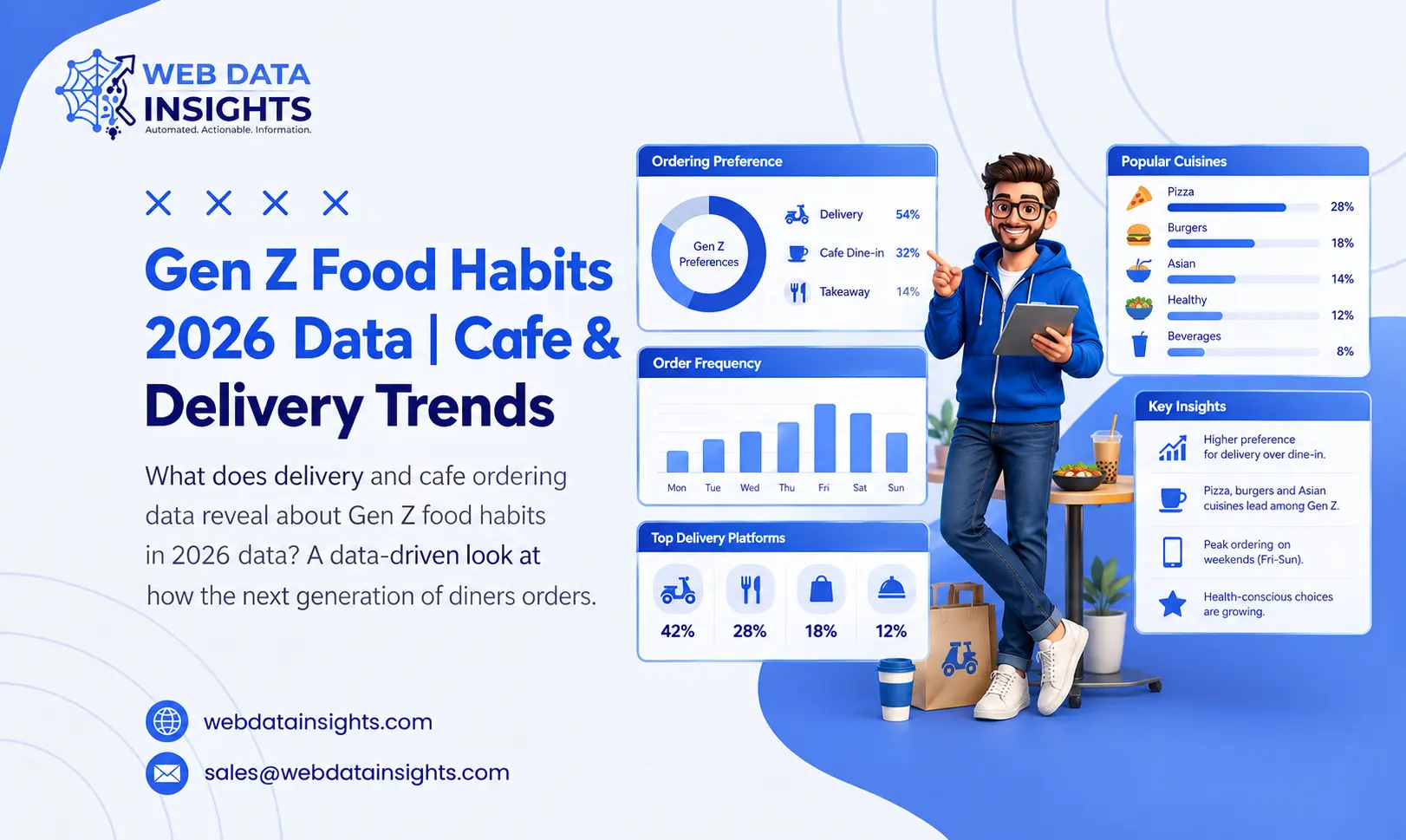
Cafe receipts and delivery app order logs are quietly telling F&B brands more about Gen Z than any survey could. Order frequency, item combinations, and delivery-versus-dine-in patterns reveal actual behavior, not stated preference — and that gap matters for anyone building a menu, loyalty program, or delivery strategy around this generation. Here’s what gen z food habits 2026 data actually shows once you look past the headlines.
QUICK ANSWER
Gen z food habits 2026 data shows a generation ordering more frequently in smaller transactions, favoring cafes and quick-service formats over traditional dine-in, and showing a stronger pull toward delivery for everyday meals — patterns that are clearest in actual ordering data, not in what diners say they prefer.
Why Ordering Data Tells a More Accurate Story Than Surveys
Actual ordering data captures what Gen Z diners do, not what they say they’d do, which is why it consistently reveals different patterns than survey-based research. Stated preference in a survey often skews toward what sounds healthy, adventurous, or socially desirable. Order logs, by contrast, show the item actually purchased at 11pm on a weeknight — a far more reliable signal for menu planning and delivery strategy.
Gen Z Cafe Ordering Data Analysis: What the Menu Choices Reveal
Cafe ordering data shows a strong lean toward customizable, visually shareable drinks, with food often ordered as an add-on rather than the main purchase. A gen z cafe ordering data analysis typically finds beverage-led baskets — a specialty drink as the anchor item, with a smaller food item attached. Customization matters heavily here: extra syrup, milk swaps, and topping add-ons show up far more often in this age group’s orders than in older cohorts.
Gen Z Online Ordering Habits 2026: How the Channel Itself Has Changed
Ordering now happens almost entirely inside apps, and the browsing behavior within those apps has become a discovery channel in its own right. Gen z online ordering habits 2026 increasingly route through delivery and cafe loyalty apps rather than phone calls or walk-ins, and in-app scrolling itself functions like a menu discovery tool — new items and limited-time offers get tried simply because they appeared prominently while browsing, not because of external advertising.
Gen Z Prefer Delivery Over Dine-In: Is That Actually True?
Data suggests a genuine shift toward delivery and pickup for everyday meals, while dine-in increasingly gets reserved for social occasions rather than routine eating. The idea that gen z prefer delivery over dine-in holds up in the data, but with an important nuance — it’s routine, solo meals shifting to delivery, while dine-in visits cluster around group hangouts and cafe visits that double as social time. Tracking delivery share separately from total order volume is what surfaces this distinction clearly.
Gen Z Cafe Ordering Trends 2026: What’s Rising Right Now
Limited-time and seasonal menu items are driving a disproportionate share of Gen Z cafe orders relative to their share of the permanent menu. Current gen z cafe ordering trends 2026 point to a strong pull toward novelty — a rotating seasonal drink or item consistently outperforms its menu placement would suggest, reflecting a generation that treats trying something new as part of the appeal, not just the taste itself.
Gen Z Average Food Delivery Order Value: What the Numbers Actually Mean
Individual order values tend to run lower than older age groups, but higher order frequency often brings total monthly spend to a comparable level. Looking only at gen z average food delivery order value per transaction can be misleading if frequency isn’t factored in — a smaller, more frequent ordering pattern can add up to meaningful lifetime value even when any single receipt looks modest. This is why order-level and cohort-level data need to be tracked together, not in isolation.
Example: Gen Z Order-Level Data
{
  "customer_cohort": "Gen Z",
  "order_id": "ORD_2026_084721",
  "channel": "Delivery",
  "order_time": "22:14",
  "items": [
    {
      "name": "Iced Matcha Latte",
      "category": "Beverage",
      "quantity": 1,
      "price": 220
    },
    {
      "name": "Chicken Wrap",
      "category": "Food",
      "quantity": 1,
      "price": 180
    }
  ],
  "subtotal": 400,
  "discount": 50,
  "delivery_fee": 30,
  "final_order_value": 380,
  "repeat_customer": true
}| Metric | Pattern Observed |
|---|---|
| Order frequency | Higher than older cohorts, more frequent smaller orders |
| Average order value | Lower per transaction, offset by frequency |
| Delivery vs. dine-in split | Delivery favored for routine meals; dine-in for social occasions |
| Menu experimentation | Higher engagement with limited-time and seasonal items |
Gen Z Dining Trends 2026: The Bigger Picture
Cafe-first ordering, high menu experimentation, and strong sensitivity to loyalty and rewards programs are the clearest dining trends in this year's data. Taken together, gen z dining trends 2026 point toward a generation that treats food ordering as frequent and habitual rather than occasional, with loyalty points, app-based perks, and novelty items playing a bigger role in driving repeat orders than price alone. Businesses tracking this through continuous Food Delivery Data Scraping get a live read on these patterns rather than a one-time snapshot.
Examples: Who Uses This Data
Cafe and QSR chains use ordering data to decide which limited-time items to make permanent. Food delivery platforms use it to fine-tune in-app recommendations and promotional placement for younger users. F&B product teams use it to guide new menu development around customization and shareability. Market research firms build generational consumer reports using combined ordering and menu trend data. Beverage and CPG brands targeting Gen Z use cafe ordering patterns to inform product and flavor development.
Expert Insights & Best Practices
Track behavior data alongside, not instead of, direct feedback
Ordering data shows what happened; direct feedback often explains why. Combining both gives a fuller picture than either alone.
Separate frequency from average order value
Looking at either metric in isolation can lead to the wrong conclusion about actual spend and loyalty. Track them together.
Watch limited-time item performance closely
A seasonal item that consistently overperforms its menu placement is a strong signal worth acting on, not just a temporary promotion.
Teams building this kind of tracking often start with a Food Delivery Dataset to establish a historical baseline before layering current-season ordering trends on top.
Common Mistakes to Avoid
- Relying only on survey data — stated preference and actual ordering behavior frequently diverge for this age group.
- Ignoring order frequency — a low average order value looks worse than it is if frequency isn't accounted for.
- Treating dine-in decline as a total decline — it's often a channel shift toward delivery, not a drop in overall demand.
- Underestimating loyalty program influence — rewards and app-based perks play a bigger role in repeat ordering than price cuts alone.
- Missing menu-level detail — category-level trends can hide which specific items are actually driving the pattern.
Where This Is Heading
As more ordering shifts entirely into apps, the data trail available to F&B brands keeps getting richer — and the businesses paying close attention to it are adjusting menus and loyalty programs faster than those relying on periodic surveys. Tools like a Restaurant Menu Tracking Dashboard show how this kind of continuous ordering intelligence is increasingly built directly into how F&B brands operate, not treated as a separate research exercise.
Frequently Asked Questions
What does gen z food habits 2026 data actually show?
Delivery and cafe ordering data shows Gen Z ordering more frequently in smaller, more frequent transactions, favoring cafes and quick-service formats over full dine-in experiences, and showing higher willingness to try new menu items than older age groups.
What does gen z cafe ordering data analysis reveal about menu preferences?
Cafe ordering data shows a strong lean toward customizable, visually shareable items and beverage-led orders, with food items often ordered as an add-on rather than the primary purchase, a pattern less common in older ordering cohorts.
How are gen z online ordering habits different in 2026?
Gen Z increasingly orders through app-based delivery and cafe loyalty platforms rather than calling or walking in, using in-app browsing behavior itself as a discovery channel for new menu items and promotions.
Does Gen Z genuinely prefer delivery over dine-in?
Ordering data suggests a meaningful shift toward delivery and pickup for everyday meals, while dine-in is increasingly reserved for social occasions rather than routine eating, making delivery share a key metric to track separately from overall order volume.
What is the average food delivery order value for Gen Z customers?
Order values tend to run lower per transaction but higher in frequency compared to older age groups, meaning total spend over a month can be comparable even though any single order looks smaller on paper.
What are the biggest gen z dining trends to watch in 2026?
Cafe-first ordering, high menu experimentation, delivery-first routine eating, and strong sensitivity to loyalty and rewards programs are the clearest dining trends showing up in current ordering data.
Conclusion
The clearest read on Gen Z food habits isn’t coming from what this generation says it wants — it’s sitting in cafe receipts and delivery order logs, showing patterns of frequency, customization, and channel choice that surveys consistently understate. For brands looking to turn these real-world ordering signals into actionable insights, WebDataInsights helps bring the data into sharper focus — making it easier to understand emerging diner behaviors and adapt menus, loyalty programs, and delivery strategies ahead of competitors still relying on assumptions.
Reliable Web Data Solutions
WebDataInsights provides clean, structured, and real-time web scraping solutions tailored to your business goals, helping automate data collection for eCommerce, market research, lead generation, and more.
Get in Touch